 PMS Việt Nam – Particle Measuring Systems | Sao Nam










Airnet và IsoAir Pro trong nhà máy dược
-
Hãng sản xuất: PMS - Mỹ Model: Document: -
Liên hệ

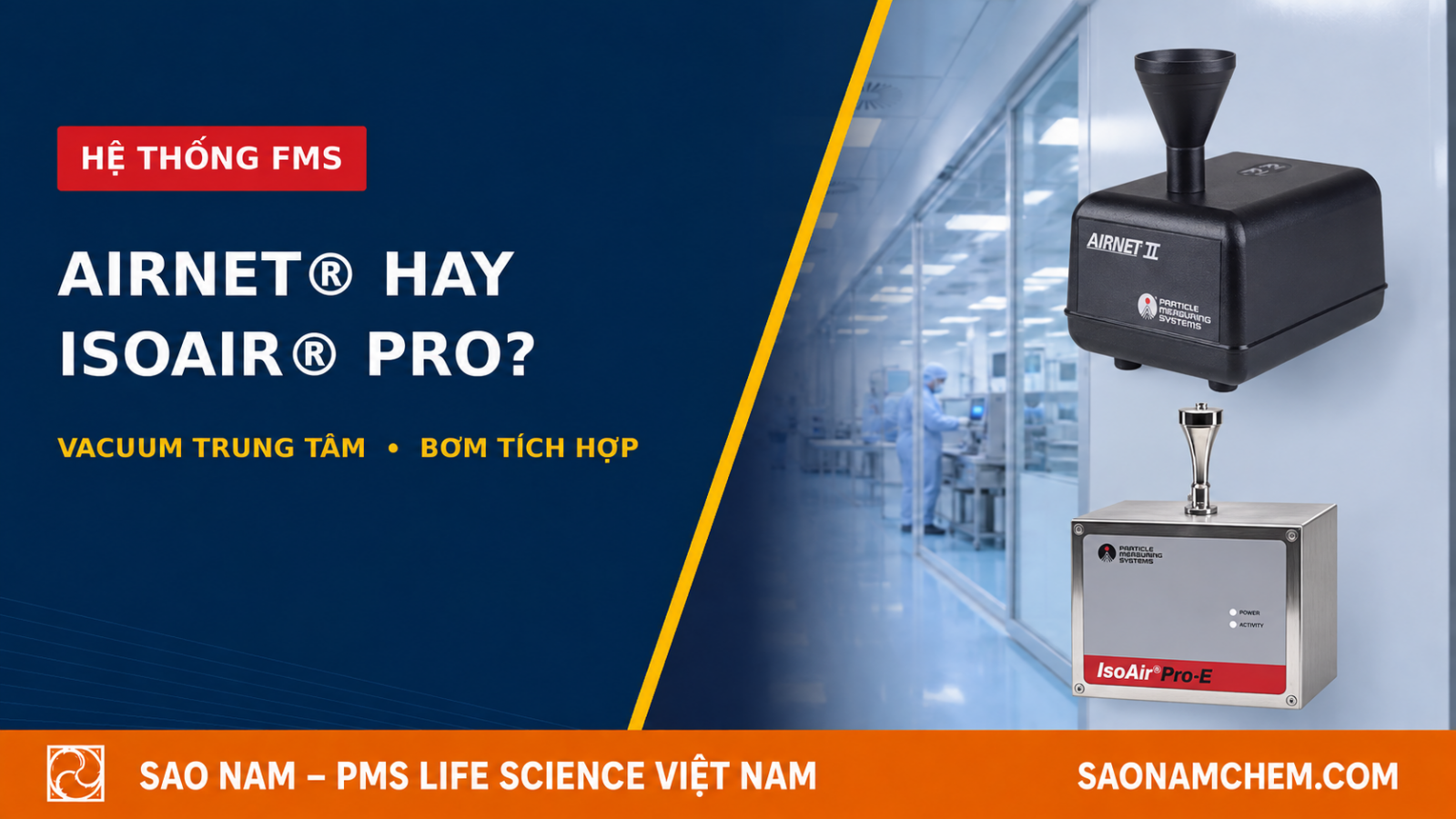
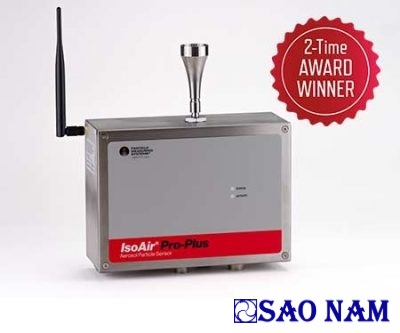
Airnet® II và IsoAir® Pro đều là giải pháp đếm hạt cố định cho môi trường dược, nhưng khác nhau ở kiến trúc tạo lưu lượng. Airnet II thường được triển khai với nguồn vacuum bên ngoài hoặc vacuum trung tâm. IsoAir Pro tích hợp blower và đường xả được lọc HEPA, giúp mỗi điểm đo hoạt động độc lập hơn.
Quyết định không nên dựa trên một dòng brochure. Cần xem toàn bộ layout, vị trí tủ kỹ thuật, đường tubing, vùng có VHP, nguồn điện, network, khả năng tiếp cận bảo trì, mức độ dự phòng và cách hệ thống phản ứng khi một thành phần hỏng.
| Tiêu chí | Airnet® II | IsoAir® Pro |
|---|---|---|
| Tạo lưu lượng | Vacuum bên ngoài/trung tâm | Blower tích hợp |
| Hạ tầng tubing | Cần thiết kế đường vacuum và cân bằng hệ | Chủ yếu đường lấy mẫu ngắn tại điểm |
| Single point failure | Vacuum trung tâm có thể ảnh hưởng nhiều điểm nếu không dự phòng | Hỏng blower thường giới hạn ở một điểm |
| Bảo trì | Tập trung vacuum nhưng phải kiểm soát mạng tubing | Bảo trì phân tán theo từng sensor |
| Môi trường vệ sinh/VHP | Cần chọn vị trí và cấu hình phù hợp | Housing 316L, IP65/NEMA4X và công bố kháng VHP |
| Nguồn/network | Có tùy chọn nguồn và Ethernet/Modbus | Có phiên bản PoE và giao tiếp hệ thống |
| Mở rộng | Cần kiểm tra công suất vacuum và manifold | Thêm điểm độc lập hơn nhưng tăng số blower |
| Continuity | Thiết kế redundancy cho vacuum và giám sát flow | Quản lý spare, alarm và thay thế từng điểm |
Airnet II phù hợp khi nhà máy đã có hoặc có thể xây một hệ vacuum kỹ thuật ổn định, tủ thiết bị dễ tiếp cận và đội bảo trì muốn tập trung thành phần chuyển động ở ngoài phòng sạch. Cảm biến nhỏ gọn tại điểm đo giúp giảm tải thiết bị trong khu vực sản xuất.
Đổi lại, thiết kế phải tính tổn thất áp suất, chiều dài tubing, manifold, lọc, condensate, rò rỉ và cân bằng giữa các nhánh. Vacuum trung tâm cần alarm, dự phòng và kế hoạch ứng phó vì sự cố chung có thể làm mất dữ liệu tại nhiều điểm. Dynamic Flow Sensing và queue dữ liệu hỗ trợ kiểm soát, nhưng không thay thế thiết kế hạ tầng.
IsoAir Pro phù hợp khi khó kéo vacuum trung tâm, cần triển khai điểm độc lập hoặc muốn giới hạn ảnh hưởng của một blower failure. Housing 316L, cấp bảo vệ IP65/NEMA4X và khả năng chịu VHP theo công bố hãng hữu ích cho các khu cần vệ sinh hoặc bio-decontamination.
Tuy nhiên, blower tích hợp nghĩa là thành phần chuyển động nằm tại từng điểm. Nhà máy cần đánh giá tiếng ồn, nhiệt, vị trí xả, access bảo trì, spare strategy và ảnh hưởng của việc tháo thiết bị. PoE có thể đơn giản hóa dây, nhưng tải switch, UPS, network segmentation và cybersecurity vẫn phải nằm trong URS.
URS phải quy định thời gian phát hiện, alarm, local buffering, trách nhiệm phản ứng và cách đánh giá khoảng dữ liệu bị thiếu. Không chỉ mô tả sensor đo được gì.
Cần xác định sensor có lưu dữ liệu cục bộ hay không, dung lượng queue, cơ chế đồng bộ lại, timestamp và cách nhận biết bản ghi trùng hoặc thiếu.
Đường ống gập, leak, filter bẩn hoặc manifold thay đổi có thể làm flow sai. Thiết kế phải cho phép xác minh, bảo trì và truy xuất thay đổi.
Xác định thời gian thay thế, thiết bị dự phòng, cấu hình đã phê duyệt và kế hoạch monitoring tạm thời. Với Grade A, mọi khoảng trống dữ liệu phải được xem trong bối cảnh sản xuất tới hạn.
- Ưu tiên Airnet II khi vacuum trung tâm có thể thiết kế tốt, bảo trì tập trung và đường ống được kiểm soát.
- Ưu tiên IsoAir Pro khi cần điểm độc lập, khó triển khai vacuum ngoài hoặc môi trường yêu cầu housing phù hợp vệ sinh/VHP.
- Dùng kiến trúc hỗn hợp nếu khu vực có failure mode khác nhau; không bắt buộc toàn nhà máy dùng một model.
- Luôn xác nhận lưu lượng, tubing, vị trí đầu dò, power, network, backup và alarm trong DQ/OQ.
- Đánh giá tổng chi phí lifecycle gồm thi công, spare, hiệu chuẩn, bảo trì và downtime.
Airnet II và IsoAir Pro có thể tham gia kiến trúc giám sát tập trung với FacilityPro® tùy cấu hình. FMS cần kết nối particle data với pressure, temperature, humidity, viable workflow và event của quy trình để hỗ trợ trend và investigation. SAO NAM là Authorized Sales & Service Center của Particle Measuring Systems, chuyên trách mảng Life Science tại Việt Nam. Phạm vi hỗ trợ có thể gồm đánh giá ứng dụng, lựa chọn cấu hình, cung cấp chính hãng, lắp đặt, qualification, đào tạo, hiệu chuẩn, bảo trì và xử lý kỹ thuật theo thỏa thuận của từng dự án.
Airnet II and IsoAir Pro are fixed airborne particle-monitoring solutions for pharmaceutical environments, but they create sample flow differently. Airnet II is deployed with an external or central vacuum source. IsoAir Pro contains an integrated blower and HEPA-filtered exhaust. The right choice depends on infrastructure, maintenance, environmental conditions and continuity requirements rather than a single performance statement.
A central-vacuum design concentrates moving components outside the clean area, while an integrated-blower design distributes them among the measurement points. These approaches create different installation needs and failure modes.
Airnet II can be attractive when a reliable technical-space vacuum system is available and the maintenance team prefers centralized service. Compact sensors can remain at the monitoring points while pumps, manifolds and filters are located in an accessible area.
The design must address pressure loss, branch balancing, tubing integrity, condensate, leaks and available capacity during expansion. Vacuum redundancy and alarms are important because a common failure may affect multiple locations. Flow sensing and data queuing support operation but do not eliminate the need for engineered infrastructure.
IsoAir Pro can simplify deployment where central vacuum is unavailable or difficult to route. Each point is more independent, so a blower failure is generally limited to that sensor. Its 316L stainless-steel housing, IP65/NEMA4X rating and stated resistance to vaporized hydrogen peroxide support installation in demanding cleanroom environments.
Distributed blowers create their own lifecycle considerations. Access, sound, heat, exhaust location, spare strategy and replacement procedures should be evaluated. Power over Ethernet can reduce cabling, but switch capacity, UPS, network segmentation and cybersecurity remain system requirements.
The URS should define detection and response for loss of vacuum, blower, network, server and sample flow. It should state local buffering, alarm routing, time synchronization, data recovery and temporary monitoring arrangements. Maintenance should not create an unexplained gap at a critical Grade A location.
Airnet II and IsoAir Pro may be integrated into a FacilityPro environmental monitoring architecture depending on the configuration. SAO NAM is the Authorized Sales and Service Center of Particle Measuring Systems specializing in Life Science applications in Vietnam. Support may include application assessment, architecture selection, configuration, installation, qualification, calibration and lifecycle service according to project scope.
A defensible selection matrix should score installation space, vacuum routing, point criticality, VHP exposure, electrical and network capacity, preventive maintenance access, expected expansion, spare strategy and recovery time. The team should include Quality, Engineering, Automation, IT, Microbiology and operations. During design qualification, each architecture decision should map to a user requirement and failure response. FAT and SAT should challenge flow alarms, communication loss, time synchronization, local data buffering and recovery. Operational qualification should also verify alarm routing and user access under representative operating conditions. This lifecycle approach prevents a lower initial hardware cost from creating higher downtime, difficult maintenance or unexplained monitoring gaps after the system enters routine operation.
- Cam kết chất lượng
- Bảo hành chính hãng
- Giao hàng tận nơi
- DỊCH VỤ 24/7
Có thể bạn thích
-
Hot
 Liên hệThêm vào giỏ hàng
 -
Hot
 Liên hệThêm vào giỏ hàng
 -
 Liên hệThêm vào giỏ hàng
 -
Hot
 Liên hệThêm vào giỏ hàng
 -
Hot
 Liên hệThêm vào giỏ hàng
 -
Hot
 Liên hệThêm vào giỏ hàng
 -
Liên hệThêm vào giỏ hàng
.png)


