 PMS Việt Nam – Particle Measuring Systems | Sao Nam







Viết URS cho hệ thống EM nhà máy dược: 25 yêu cầu kỹ thuật và dữ liệu cần có
-
Hãng sản xuất: Model: Document: -
Liên hệ


User Requirements Specification mô tả nhu cầu người dùng và tiêu chí chấp nhận. Nếu URS chỉ chép tính năng từ brochure, dự án dễ bỏ sót failure mode thực tế của nhà máy hoặc khóa vào một thiết kế trước khi đánh giá rủi ro.
Với FMS/EMS, nhóm soạn thảo nên gồm QA, microbiology, engineering, automation, IT, validation và người vận hành. Mỗi yêu cầu cần mã, mức quan trọng, lý do, tiêu chí chấp nhận và phương pháp kiểm chứng dự kiến.
Khu vực, quy trình, phòng, dây chuyền và giai đoạn triển khai.
Loại sensor, vị trí, mã điểm, dải đo và mức quan trọng.
At rest, operational, setup, cleaning và maintenance.
Continuous, interval, recipe hoặc event-based.
Particle sizes, CFU workflow, Pa, °C, %RH và đơn vị báo cáo.
Alert/action, delay, hysteresis và điều kiện kích hoạt.
Màn hình, đèn/còi, email hoặc kênh được phê duyệt.
Ai xác nhận, comment, thời gian và escalation.
Quản lý version, phê duyệt và áp dụng theo khu vực/sản phẩm.
Nguồn thời gian, timezone, DST và quyền thay đổi.
Tài khoản duy nhất, role, least privilege và review định kỳ.
Ghi tạo/sửa/xóa/cấu hình, người, thời gian và lý do.
Giữ kết quả gốc cùng trạng thái, recipe, sensor và location.
Định dạng, truy xuất, bản sao chính xác và retention.
Áp dụng theo phạm vi quy định và SOP của nhà máy.
Raw, summary, trend, excursion, batch và report template.
Workflow reviewer/approver, exception và audit-trail review.
Tần suất, giám sát lỗi, vị trí, mã hóa và trách nhiệm.
Restore test, RTO/RPO, failover và kế hoạch mất IT.
Protocol, port, VLAN, firewall, redundancy và ownership.
Hardening, antivirus, patching, account cao quyền và remote access.
Uptime mục tiêu, local buffering và xử lý mất kết nối.
Chu kỳ, truy xuất chuẩn, access và cảnh báo đến hạn.
DQ/IQ/OQ/PQ, traceability, test data và deviation.
FAT/SAT, tài liệu, training, spare, warranty và service.
| Giai đoạn | Câu hỏi chính | Đầu ra |
|---|---|---|
| URS | Người dùng cần gì? | Yêu cầu được phê duyệt |
| DQ | Thiết kế đáp ứng URS thế nào? | Design review và traceability |
| IQ | Lắp đặt có đúng thiết kế/tài liệu? | Bằng chứng phần cứng, phần mềm, network |
| OQ | Chức năng có chạy trong giới hạn dự kiến? | Test alarm, user, audit trail, backup, interface |
| PQ | Hệ thống có phù hợp trong vận hành thực? | Bằng chứng theo quy trình, điểm đo và người dùng |
FacilityPro® của Particle Measuring Systems cung cấp kiến trúc giám sát môi trường cho dữ liệu hạt sống, hạt không sống và thông số môi trường. Cấu hình cuối phải được thiết kế từ URS, risk assessment và hạ tầng của nhà máy.
SAO NAM là Authorized Sales & Service Center của Particle Measuring Systems, chuyên trách Life Science tại Việt Nam. Hỗ trợ có thể gồm khảo sát, thiết kế phạm vi, lựa chọn sensor, cấu hình, phối hợp qualification, đào tạo, bảo trì và xử lý kỹ thuật theo dự án.
A User Requirements Specification should describe what the pharmaceutical site needs the environmental monitoring system to accomplish and how acceptance will be demonstrated. It should not be a copy of a supplier catalogue. A strong URS connects process risk, product exposure, cleanroom design, sensor strategy, data governance and operational responsibilities.
Quality, microbiology, engineering, automation, IT, validation and end users should participate. Each requirement should have a unique identifier, rationale, criticality, acceptance criterion and planned verification method. Ambiguous terms such as modern, user-friendly or fully compliant should be replaced by measurable behavior.
The URS should define monitored rooms, process states, sensor types, locations, ranges, channels, units, sampling frequency and recipe logic. Alarm requirements need alert and action levels, delays, hysteresis, annunciation, acknowledgement, comments and escalation. The document should describe expected behavior during setup, operation, cleaning, maintenance and loss of communication.
Availability requirements should address local buffering, network interruption, server outage and recovery. A system that displays trends but loses source data during an outage may not meet the site's actual control strategy.
Requirements should cover unique accounts, role-based access, least privilege, clock synchronization, audit trails, raw data, metadata, electronic records, signatures where applicable, review, reporting and retention. Backup frequency is not enough; restore testing, disaster recovery objectives and ownership should also be specified.
Network interfaces, protocols, firewall rules, remote access, cybersecurity hardening, patching and privileged administration should be agreed with IT. Recipe and limit changes need controlled versioning and approval. Reports should support raw data, trends, excursions, batches and review evidence without obscuring the original record.
The approved URS becomes the baseline for design qualification and the traceability matrix. Installation, operational and performance qualification should verify the relevant requirements. FAT, SAT, document handover, training, spares, warranty and service expectations should be defined before procurement closes.
FacilityPro® from Particle Measuring Systems supports pharmaceutical environmental monitoring architectures. SAO NAM is the Authorized Sales & Service Center of Particle Measuring Systems specializing in Life Science applications in Vietnam. Support may include application assessment, scope definition, sensor selection, configuration, qualification coordination, training, maintenance and troubleshooting depending on the supplied system and project agreement.
A mature URS should also define how compliance evidence will be delivered. The supplier response, design documents, configuration specification, traceability matrix, test scripts, calibration records, software inventory, backup procedure, cybersecurity assumptions and training materials should map back to approved requirements. Each requirement needs a verification method and accountable owner. Requirements marked as future or optional should still have defined interfaces so expansion does not force an uncontrolled redesign. Before approval, quality, engineering, microbiology, IT, automation and end users should review the same version. This cross-functional review prevents late discoveries such as insufficient network ports, missing alarm routing, unsupported retention periods or access roles that conflict with site procedures. The approved URS then becomes the baseline for design review, change control and final acceptance.
Before release, the site should confirm that the approved procedure, configured equipment, user training, raw data, review records and deviation process all describe the same workflow. Technical statements should be traceable to the current controlled standard or manufacturer document. Any site-specific limit, sampling duration or acceptance rule requires an approved rationale. Periodic review should compare the original assumptions with operating trends, changes, investigations and maintenance history. This final alignment is what allows a technically capable instrument or system to remain reliable and audit-ready throughout routine use.
- Cam kết chất lượng
- Bảo hành chính hãng
- Giao hàng tận nơi
- DỊCH VỤ 24/7
Có thể bạn thích
-
 Liên hệThêm vào giỏ hàng
 -
Hot
 Liên hệThêm vào giỏ hàng
 -
Hot
 Liên hệThêm vào giỏ hàng
 -
 Liên hệThêm vào giỏ hàng
 -
 Liên hệThêm vào giỏ hàng
 -
 Liên hệThêm vào giỏ hàng
 -
Hot
 Liên hệThêm vào giỏ hàng
 -
 Liên hệThêm vào giỏ hàng
 -
 Liên hệThêm vào giỏ hàng
 -
 Liên hệThêm vào giỏ hàng
 -
Hot
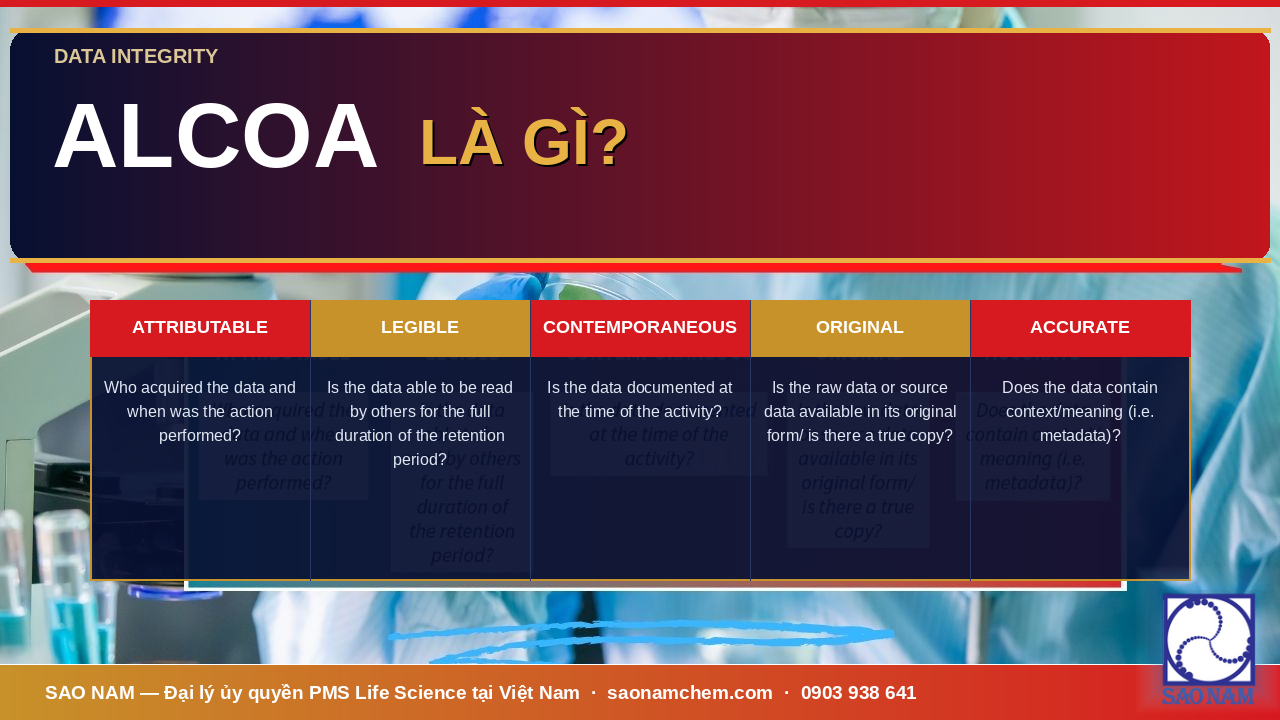
 Giải pháp PMS tuân thủ Sự toàn vẹn của dữ liệu (Data Integrity) đáp ứng các tiêu chuẩn của GMP & FDALiên hệThêm vào giỏ hàng
 -
 Liên hệThêm vào giỏ hàng
.png)


